
In-Person Somatic Intensives for Deep, Focused Trauma Recovery
For individuals seeking accelerated results, in-person somatic intensives offer immersive trauma healing using advanced Somatic Experiencing® methods, touch work, and personalized nervous system repair.
In Person Somatic Intensives, Toronto and the GTA
Multi-day, one-on-one somatic intensives for those who understand their history and still have the same physical responses when life gets hard
What a Somatic Intensive Is
An intensive is a set of extended one-on-one somatic sessions held over consecutive days, built around where you are at and what you need to move through or change. It is not a retreat and it is not a group program. It is dedicated, individual work, concentrated into a short window so each day builds on the one before instead of restarting after a week away.
Sessions are in person in Toronto and the GTA. People travel in for them, and the format is built with that in mind.


What is Happening is Physiological
And It Responds to Work That Meets It There
You have likely already put in significant work. Therapy, maybe more than one kind. Reading, reflection, real insight into where your patterns come from.
And still, when something stressful lands, your body responds on its own schedule. It floods, it shuts down, or it tightens, sometimes all three in sequence, before you get a say in it.
That gap, between understanding something and still living it in your body, is not a personal failure and it is not a sign the therapy was wasted. It is what happens when the thinking layer has been worked thoroughly and the physical layer underneath it has not been worked with directly.
An intensive is a way to work in that layer with more time and fewer interruptions than weekly sessions allow.
An Intensive Tends to Be a Good Fit If:
- You have done meaningful therapeutic or cognitive work and your body still responds automatically under stress
- Weekly, incremental work has not moved things the way you hoped
- You want focused work in a concentrated block rather than spread thin over months
- You are traveling to Toronto and want to make a dedicated trip of it
- You are preparing for, or coming through, a major life transition
- You prefer in-person, hands-on somatic work
- You want something specific and well-trained to work with, not vague
- The kind of work you are ready for asks for sustained, attentive space, not a scattered weekly hour
You May Recognize Yourself In
A Body That Will Not Settle
- Your system stays activated, braced, or on alert. Rest does not come easily, or it does not help when it does.
Freeze or Shutdown Patterns
- You go flat, numb, or disconnected, sometimes without warning. The world feels far away or hard to engage with.
Pain or Symptoms Without a Clear Cause
- You have been to doctors, and nothing explains it fully. The symptoms are real and they are physiological.
Progress That Does Not Stick
- You have done real work and understand yourself well, and still your body responds the way it always has.
How an Intensive Is Different From Weekly Sessions
Weekly sessions work incrementally, and there is value in that. It can also leave a gap.
You make progress in a session, then spend a week back in ordinary life before you can build on it, and some of the next session goes to picking the thread back up.
An intensive removes that gap. The work keeps building, and things that stay just out of reach in a single weekly hour sometimes become accessible when there is time and room to stay with them.

Meet Alex Your Practitioner for the Intensive
Alex is a Somatic Educator and Bodyworker who helps clients navigating trauma, chronic stress, and persistent physical symptoms by working with the body, not only the mind. Alongside Somatic Experiencing, Alex is trained in trauma-trained and hands-on bodywork. Somatic education is brought into every session so you leave with naturally acquired skills you can use.
How the Days Are Structured
Each day centres on a focused 90 minute morning and evening block OR one 3 hour block in the morning.
The rest of the day is deliberately yours. The hours after somatic work are part of the work, and over-packing the day tends to undo what the morning opened. A walk, rest, food, quiet, that is where a lot of the change consolidates.
- A typical intensive runs over 2 to 5 consecutive days, weekdays or weekends for building foundational awareness and easing acute stress
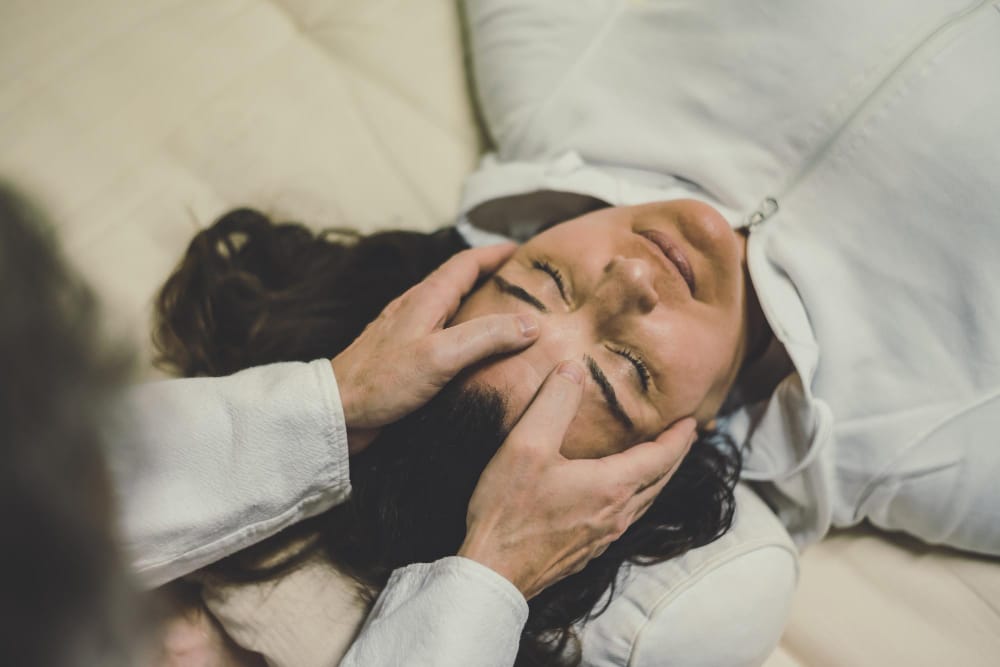
- The work may include sensation-based attention, subtle movement, body mapping, and somatic touch work, depending on your presentation and consent
- In person in Toronto, in the GTA. If traveling is an issue, you may also bring me to you.

People I Work With
- Complex PTSD | Developmental Trauma
- Dissociative Disorders (DPDR) | Freeze/Shutdown States
- Relational & Attachment Wounding | Intimate Partner Violence
- Childhood Abuse Survivors
- Refugees | Systemic Oppression
- First Responders | Medical Trauma
- Digestive Issues Linked to Nervous System Dysregulation
- Scar Tissue & Post-Accident Recovery (Motor Vehicle, Brain Injuries)
- Medical & Birth Trauma
- Chronic Pain/Fibromyalgia
- Mysterious Illnesses
- Sleep/Insomnia | Digestive Issues
- Eating Disorders | Addiction
- LGBTQIA+ | Gender Dysphoria
- BIPOC | Native Populations
- Women’s Issues | Domestic/Sexual Violence Survivors
- Anxiety | Depression
- Borderline Personality Tendencies
- Self-Esteem | Relational Wounds
What This Format Makes Possible

A concentrated block is different than weekly work. For some people and presentations of symptoms, an intensive format can change the way shifts integrate by:
- Building on the previous day’s work the next morning, instead of restarting each week
- Staying with something long enough for it to actually move and integrate, rather than running out of the hour
- Developing skills for noticing how your body responds to stress before it takes over
- Addressing physiological patterns that persist even after other significant work
- More capacity in relationships and daily life
What Changes When the Work Has Room

Steadiness in Your System
- When the physiological patterns underlying chronic activation start to shift, the body stops feeling like the source of the problem. Calm becomes something you can access, not just something that happens when nothing is wrong.

Skills Built with Ease
- You leave with practical somatic skills and education you can use between sessions and long after the intensive ends.

Continuity Your Can Feel
- Without a week-long gap between sessions, the work keeps building. Things that stay out of reach in a single weekly hour have time to surface and settle.
This Is Your Opportunity
To rewire how your body responds to stress, to move through trauma instead of staying stuck in it, and to rediscover your inner strength. Through 1:1 somatic intensives, you’ll learn to notice your body’s signals, regulate emotions, and release what has been holding you back. This work can bring more clarity, better sleep, reduced pain, and a renewed sense of self-trust.
Wanna Get In Touch?
I’d Love to Hear Your Story
Get Clarity Before You Begin
It’s natural to have questions before starting something new. Explore the FAQs to better understand how we can support you.
How long is a somatic intensive?
Most run over two to three consecutive days, weekdays or weekends. Each day centres on a focused 90 minute morning block, with the rest of the day left open for rest and integration.
How is an intensive different from weekly sessions?
Weekly work is incremental, with a week back in ordinary life between sessions. An intensive removes that gap, so the work keeps building day to day and things that stay out of reach in a single weekly hour have room to surface.
How much does an intensive cost?
Every intensive is scoped to the individual, so the price comes from
Is touch work required?
No. Everything is consent-based. Trauma-trained touch work is one tool, used only where appropriate and explicitly consented to. Many people do significant work without any touch.
Is this online or only in person in Toronto?
In person in Toronto and the GTA is the heart of the offer, especially where touch work is planned. Online intensives are possible for the parts that do not involve touch. The consult sorts out which fits.
Do I need prior somatic experience?
No. The start of the intensive orients you to the work, whatever your starting point.
Is it too intense to do this much in a few days?
The pace is set by what your body can actually stay with, not by the calendar. We work in small, titrated pieces and build in time to settle before going further, which is part of why breaks are built into your itinerary. Going slower is always available, and often that is what makes the work hold. People often extend the time on their intensives.
What happens after the intensive, and will it hold?
You leave with practical skills and a clearer read on what your body is doing, so the work keeps going on your own. Most intensives include a follow-up session to check in and integrate. Whether one intensive is enough or you come back for more depends on what you are working with and your trauma history, and we talk about that honestly rather than assuming an answer up front.
Can I do an intensive if I am already seeing a therapist?
Yes, and it often works well alongside ongoing therapy. The intensive works with the physical layer, which tends to complement talk-based work rather than replace it. With your consent I can coordinate with your therapist, or the work can simply run in parallel.